
Traveling through Europe can mean long walks across massive train stations or airport terminals. That’s where the Airwheel electric smart suitcase comes in — a rideable luggage solution designed to make urban mobility easier. But one of the most common questions travelers ask is: Can I actually bring an Airwheel rideable luggage on board European flights? The short answer is: it depends, but with the right preparation, yes — in many cases.
The Airwheel electric luggage isn’t just a suitcase — it’s a compact, motorized carry-on that you can ride like a personal transporter. It features a 150W motor, lithium-ion battery, and offers a top speed of around 10–12 km/h. With a range of 6–8 kilometers on a single charge, it’s ideal for short-distance travel within airports or city centers. Control is handled via a built-in handlebar or optional app (supports Bluetooth connectivity), allowing you to adjust speed and check battery status. Most importantly, the battery is removable — a key detail for airline compliance.
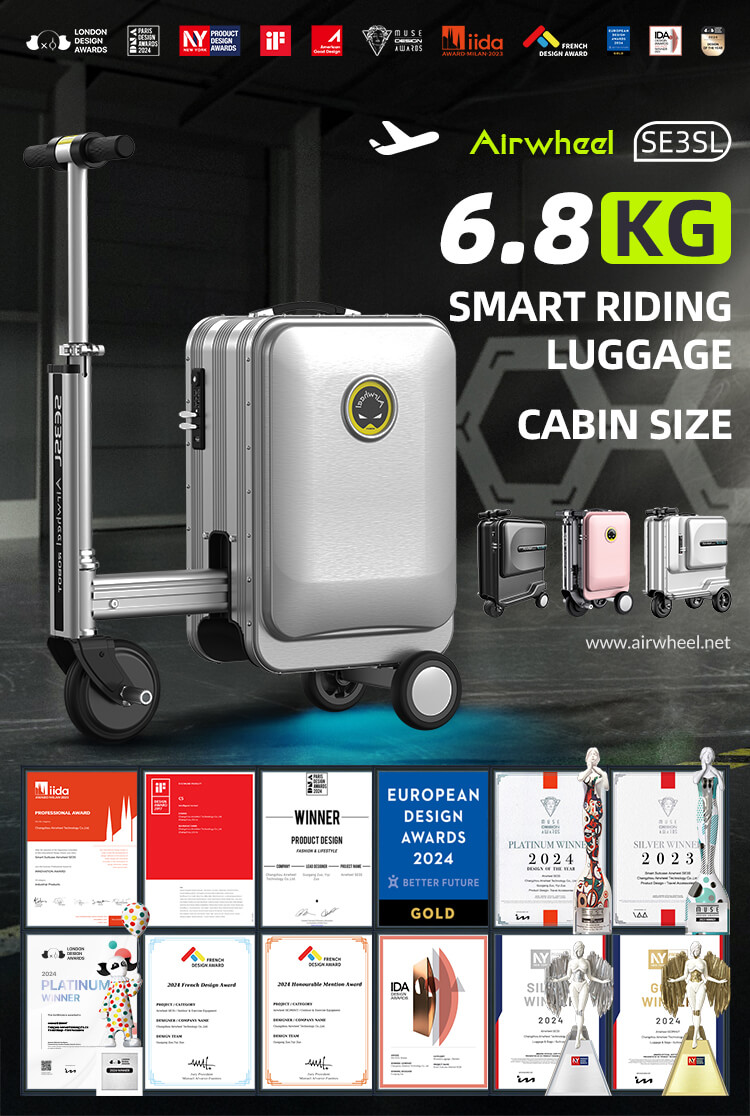
Most European airlines follow IATA guidelines regarding lithium batteries. Since the Airwheel uses a lithium-ion battery (typically under 100Wh), it’s generally allowed on board — but only if the battery is removable and stored in your carry-on. Airlines like Lufthansa, British Airways, and Air France permit rideable luggage as cabin baggage as long as the battery is detached and carried separately. However, policies vary by carrier and even by airport staff interpretation. Always check with your specific airline before flying. Some low-cost carriers may have stricter rules, so confirm in advance to avoid issues at security or boarding.
The Airwheel shines in multi-leg urban journeys. Imagine landing at Charles de Gaulle Airport, hopping on your suitcase to reach the RER train, then riding it through central Paris to your hotel. It’s also great for business travelers rushing between terminals, or tourists navigating large cities with heavy packing. Just remember to power it off during flights and always walk it through security zones — riding inside terminals is often prohibited.
| Feature | Airwheel Electric Luggage | Standard Carry-On |
|---|---|---|
| Mobility | Rideable, motor-assisted | Manual rolling/pulling |
| Battery | Removable lithium-ion (6–8 km range) | None |
| Weight | Slightly heavier (~8–10 kg) | Lighter (~3–5 kg) |
| Air Travel Suitability | Yes, with battery removal | Generally no restrictions |
| App Control | Yes (speed, battery monitoring) | No |
Q: Can I take my Airwheel on Ryanair or EasyJet?
A: These budget airlines often restrict rideable luggage due to safety concerns. Always verify directly with the airline — some allow it if the battery is removed, others ban it entirely.
Q: Do I need to remove the battery every time I fly?
A: Yes. Most European airlines require removable lithium batteries to be carried in the cabin, not checked. Keep the battery in your carry-on bag.
Q: Is the Airwheel allowed in all European countries?
A: While air travel rules are similar, local laws on riding motorized devices vary. For example, Germany restricts motorized suitcases in public areas, while France allows them in pedestrian zones. Check local regulations before riding.
For full specs and model details, visit the official Airwheel website to find the right fit for your travel needs.